Choosing an air compressor: air delivery, pressure and tank size
The key figure of a compressor is its air delivery in litres per minute: it must be higher than the air consumption of your air tools. Pressure, tank size and noise come after that.
Popular picks from this guide
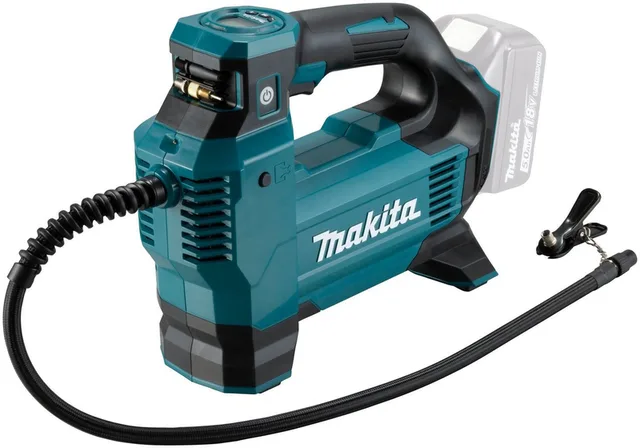
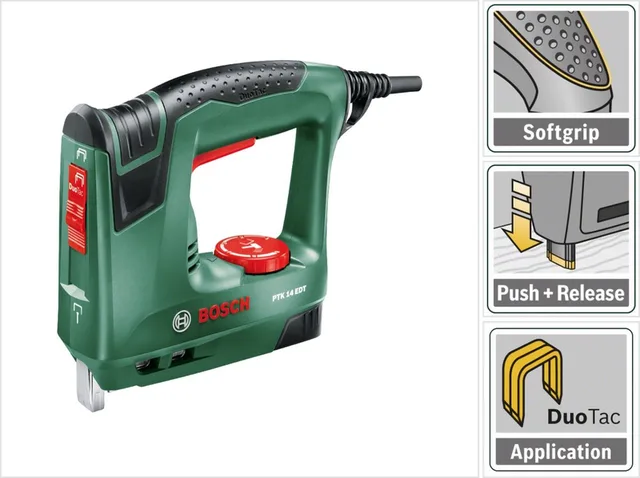
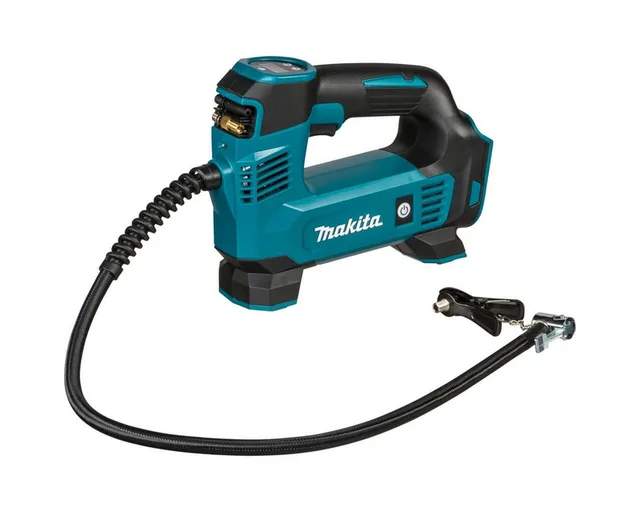
Popular products at today's lowest price. Compare every shop on the product page.
Intake or air delivery: which figure counts?
Makers give two figures in litres per minute. The intake is the amount of air the compressor draws in. The air delivery (also free air delivery or effective output) is the air that reaches the outlet at a given pressure. It is always well below the intake, which is why the intake is often printed large on the box.
Air tools have an air consumption in litres per minute that the maker states. Choose a compressor whose air delivery is above the consumption of the tool that needs the most air, with some margin. Otherwise the compressor keeps cutting in and the pressure drops while you work.
How much pressure do you need?
Workshop compressors usually reach a maximum pressure of 8 or 10 bar. Most air tools work at about 6 bar; you set the working pressure on the regulator with its gauge. Car tyres and balls need much less. What matters is that the compressor can hold your tool's working pressure.
Which tank size?
The tank stores compressed air. A large tank buffers more, so the motor starts less often, but it does not make more air. For short bursts, for example with an air nailer or stapler, a blow gun or a tyre inflator, a small tank is enough.
For tools that need air without a break, such as spray guns, air sanders or sandblasters, air delivery decides. A large tank then only helps at the start. With heavy compressors with a large tank, also check the wheels and weight if you want to move it around.
Oil-free or oil-lubricated?
An oil-free compressor needs no oil changes and is usually lighter. It suits DIY work with breaks. An oil-lubricated compressor needs care: you check the oil level and change the oil as the manual says. Makers often use it in workshop compressors for longer running times.
Some makers state the duty cycle in per cent: how long the motor may run within a period. For noise you find the sound power level in dB(A). Compressors sold as "silent" are quieter; always compare the stated dB(A) figure, though.
230 V, 400 V or cordless
Most compressors for home use run on a normal 230 V socket. Large workshop compressors often need a 400 V three-phase supply. Cordless compressors from the tool platforms are small and meant for tyres, balls and small jobs on the go; they use the batteries of your battery platform.
Quick coupling, hose and condensate
Quick couplings come in several systems that do not fit each other. Check that compressor, hose and tool use the same system, or plan for adapters.
Compressing air produces condensate in the tank. Drain it through the drain valve after work so the tank does not rust from the inside. For spraying, fit a water separator or filter between the compressor and the gun.
Comparing on ToolRango
Under compressors you find the models with the prices of every shop. Some compressors also come as a set with hose and accessories. Each version has its own EAN or part number, and ToolRango compares them separately, so you see what is in the box.
Frequently asked questions
How much air delivery do I need?
More than the air consumption of the tool that needs the most air. The tool's maker states its consumption in litres per minute. Compare it with the compressor's air delivery, not its intake, and allow some margin.
Which tank size makes sense?
For tyres, blowing and nailers a small tank is enough. For tools with continuous air use, such as spray guns and sanders, air delivery counts most. A larger tank makes the motor start less often but does not deliver more air.
Can I spray paint with a compressor?
Yes, if its air delivery is above the air consumption of the spray gun, as stated by the gun's maker. A spray gun needs air without a break. Fit a water separator or filter so no water or oil gets into the paint.
Keep browsing
ToolRango does not test tools. This guide sets out what manufacturers and standards say. Always follow the manual of your own tool.
Products from this guide
Popular products with a current price at the shops. Compare the prices on the product page.
- Einhell
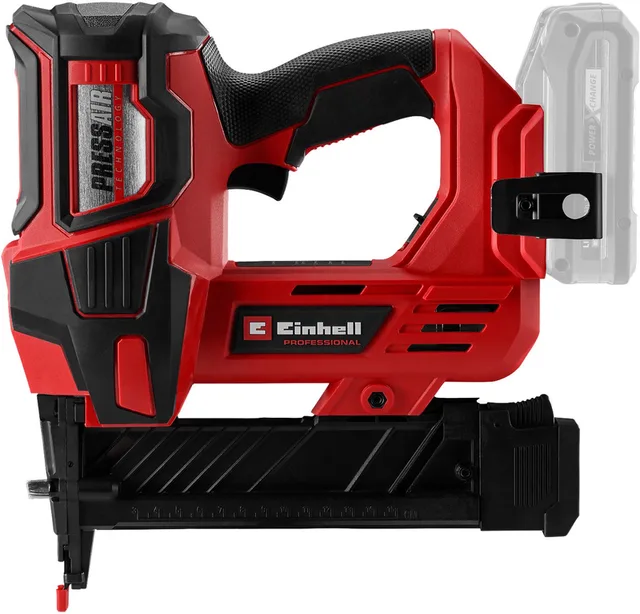
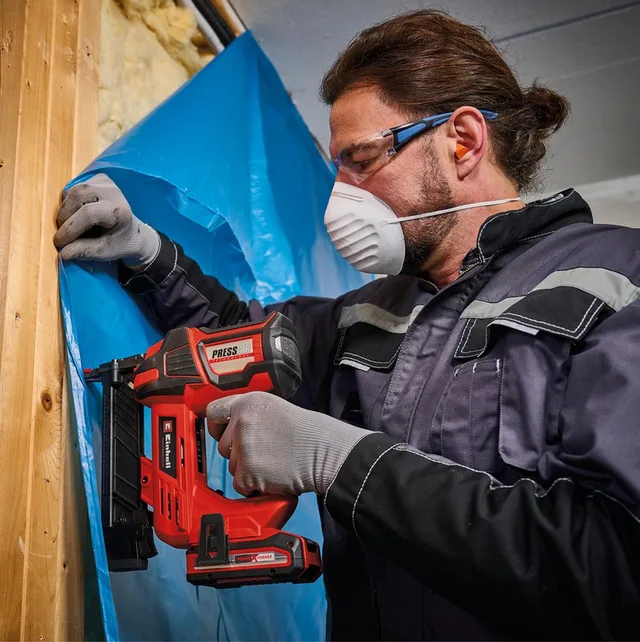
Accu Tacker FIXETTO 18/38 S Li Solo
Power X-Change · 18V/Li-ion18 VFrom DKK 1,405.98 · 2 offers
- Makita
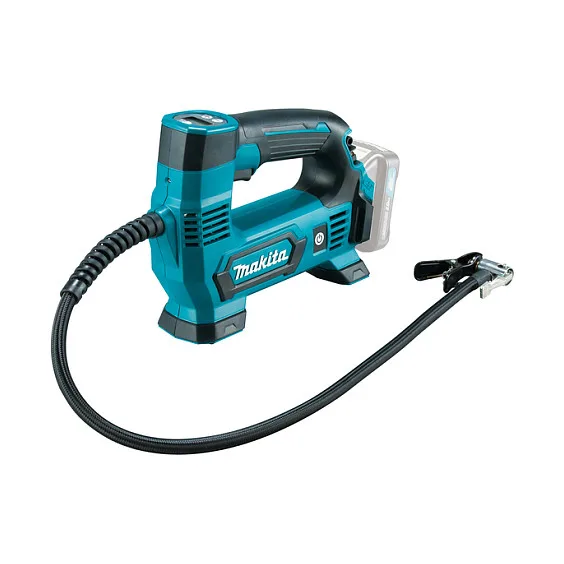
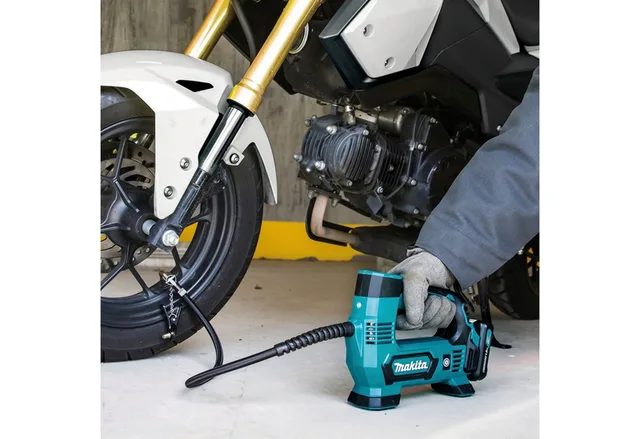
MP100DZ air compressor
DKK 568.48 · 1 offer
- Makita
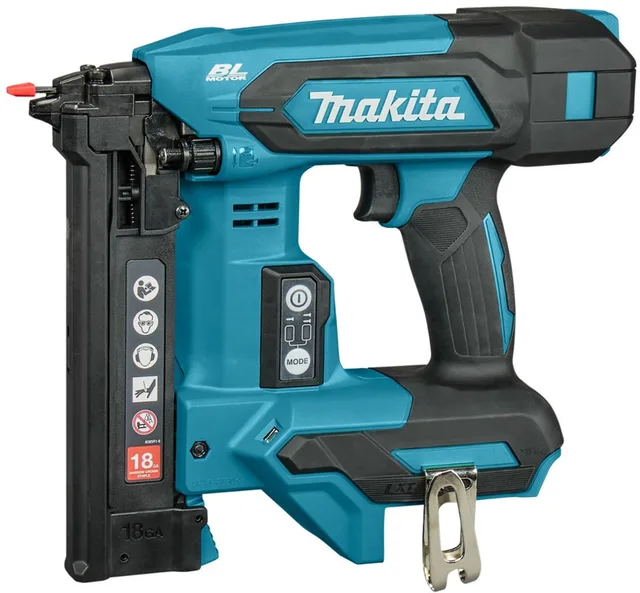
DST630Z Accu niettacker (narrow crown) 18V Basic Body
18 VFrom DKK 3,490 · 2 offers
- Bosch Home & Garden
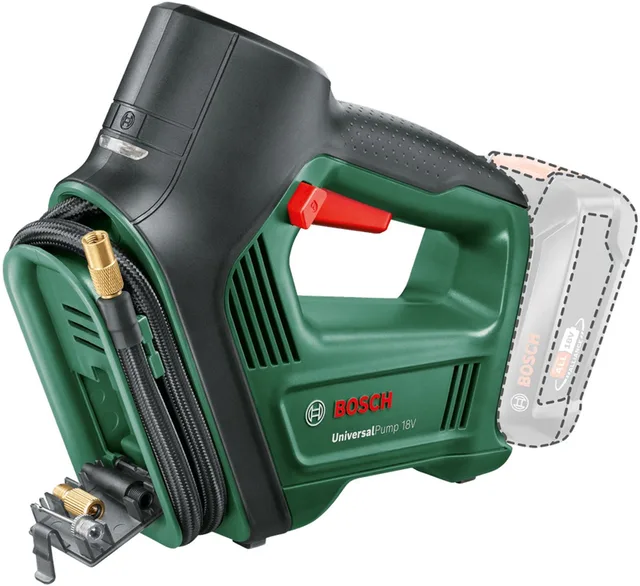
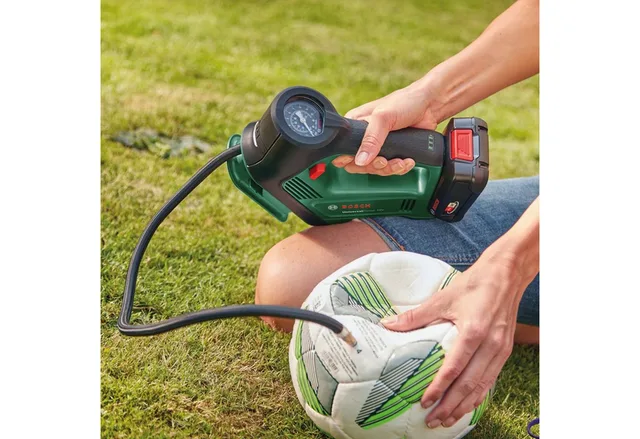
UniversalPump 18V Compressor
Zonder 18 V accu en lader18 VDKK 568 · 1 offer
- Bosch Home & Garden
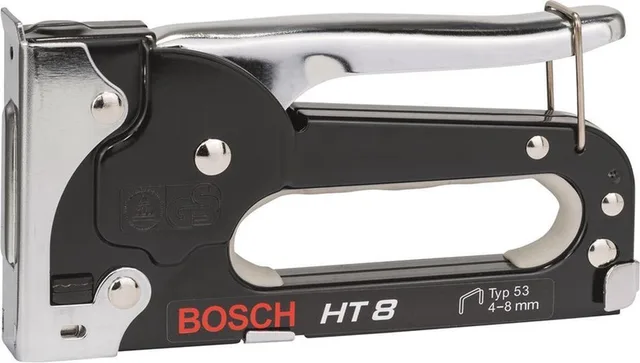
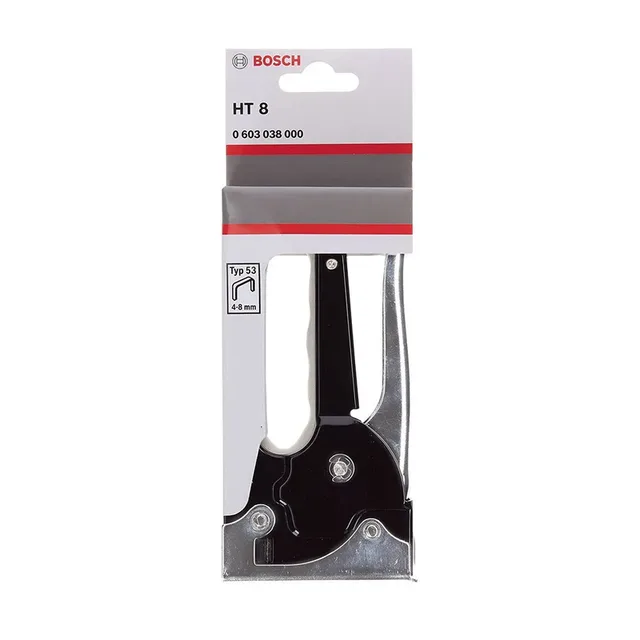
Handtacker HT 8
From DKK 177.98 · 2 offers
More guides
- Which battery platform should you choose? With a battery platform you buy batteries once and use them across many tools of the same brand. Here’s how to choose the platform that fits your work. Read the guide
- Combi drill, SDS or rotary hammer: the difference A combi drill and a rotary hammer look alike, but they work in very different ways. Here’s what each type does and which specifications to compare. Read the guide
- Circular saw or plunge saw? Both saws use a round blade and cut straight. The difference is how the blade enters the material and how you guide the saw. Read the guide

- Guide Choosing a saw blade: teeth, bore and shank
- Guide Batteries and Ah explained
- Guide Brushless motors: what do they get you?
- Guide Choosing a cordless lawn mower
- Guide Choosing a robot mower: with or without a wire?
- Guide Choosing a hedge trimmer: blade length, tooth spacing and reach
- Guide Choosing an angle grinder: size, battery and the right disc